
Feeling tired in the middle of the day doesn’t always mean you need another cup of coffee.
The foods you choose, how regularly you eat, how much water you drink, and even the way you combine different nutrients can influence how energized and satisfied you feel throughout the day.
There isn’t one magical “energy food.”
Instead, steady energy generally comes from building meals around a combination of nutritious carbohydrates, protein, healthy fats, fruits, vegetables, and adequate hydration.
The goal isn’t to create a perfect diet.
It’s to make everyday meals more balanced, satisfying, and practical.
Here are some simple ways to approach eating for better everyday energy.
1. Start With a Balanced Breakfast
Breakfast doesn’t have to be complicated.
A useful approach is to combine a source of protein with fiber-rich carbohydrates and nutritious fats.
For example:
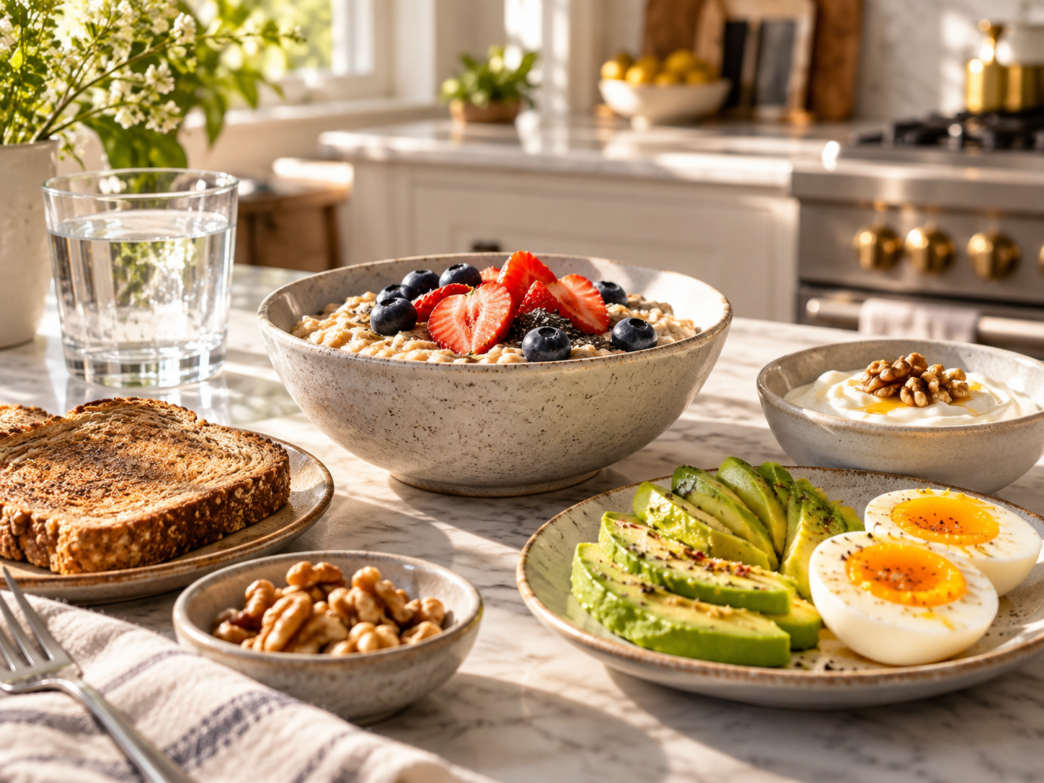
- Oatmeal with berries, walnuts, and Greek yogurt
- Eggs with whole-grain toast and avocado
- Greek yogurt with fruit, oats, and chia seeds
- Whole-grain toast with peanut butter and banana
- Cottage cheese with berries and nuts
Why combine foods?
Carbohydrates provide an important source of energy, while protein, fiber, and fat can help make meals more satisfying.
Rather than eating something like a pastry by itself, adding protein and fruit can create a more complete meal.
Easy breakfast formula
Try combining:
Protein + whole grain or fruit + healthy fat
For example:
Eggs + whole-grain toast + avocado
or
Greek yogurt + berries + walnuts
Simple combinations like these can make breakfast easier to plan.
2. Choose Carbohydrates That Bring More Nutrition With Them
Carbohydrates sometimes get an unfair reputation.
Your body uses carbohydrates as an important source of energy.
The bigger question is which carbohydrate-containing foods you choose most often.
Consider foods such as:
- Oats
- Brown rice
- Quinoa
- Whole-grain bread
- Beans
- Lentils
- Sweet potatoes
- Potatoes
- Fruit
- Vegetables
These foods can provide carbohydrates along with nutrients such as fiber, vitamins, and minerals.
Whole grains, fruits, vegetables, beans, peas, and lentils can all be useful parts of a balanced eating pattern.
You don’t have to avoid white rice, pasta, bread, or other foods you enjoy.
Instead, think about variety and overall meal balance.
For example, pasta can be combined with vegetables, lean protein, olive oil, and a side salad rather than being eaten alone.
3. Include Protein With Your Meals
Protein is an important nutrient used throughout the body.
Including a protein source at meals can also make meals more satisfying.
Protein options include:
- Eggs
- Chicken
- Turkey
- Fish
- Greek yogurt
- Cottage cheese
- Beans
- Lentils
- Tofu
- Tempeh
- Nuts
- Seeds
- Soy foods
You don’t necessarily need meat at every meal.
Plant-based foods such as beans, lentils, tofu, nuts, seeds, and soy products can also provide protein.
A simple question to ask when building a meal is:
“Where is my protein coming from?”
If the answer isn’t obvious, consider adding one.
4. Don’t Forget Healthy Sources of Fat
Fat is another nutrient your body needs.
Foods that provide predominantly unsaturated fats can be incorporated into balanced meals.
Examples include:
- Avocado
- Olive oil
- Nuts
- Seeds
- Nut butters
- Fatty fish such as salmon
These foods can also help make meals more satisfying.
You don’t need large amounts.
Adding walnuts to oatmeal, avocado to toast, olive oil to vegetables, or peanut butter to fruit are simple ways to include nutritious fats.
5. Eat More Fruits and Vegetables
Fruits and vegetables provide vitamins, minerals, fiber, and a wide variety of naturally occurring plant compounds.
Try building more color into your meals.
For example:
Breakfast
Add blueberries or strawberries to oatmeal or yogurt.
Lunch
Add lettuce, tomatoes, cucumber, peppers, or carrots to a sandwich or salad.
Snack
Choose an apple, orange, banana, berries, or another favorite fruit.
Dinner
Include broccoli, spinach, green beans, roasted vegetables, or a salad.
Fresh produce isn’t your only option.
Frozen and canned fruits and vegetables can also be convenient choices.
When buying canned options, compare labels if you’re trying to manage added sodium or added sugars.
The goal isn’t to eat every vegetable imaginable.
Find several fruits and vegetables you genuinely enjoy and make them easy to access.
6. Build a Smarter Afternoon Snack
For many people, the afternoon is when energy seems to disappear.
It’s also when vending machines and sugary snacks become particularly tempting.
Instead of relying on a snack consisting almost entirely of refined carbohydrates, try combining foods.
Examples include:
- Apple with peanut butter
- Greek yogurt with berries
- Banana with a handful of nuts
- Carrots with hummus
- Whole-grain crackers with cheese
- Cottage cheese with fruit
- Hard-boiled egg with fruit
- Trail mix containing nuts and dried fruit
The idea is simple:
Pair carbohydrates with protein or nutritious fat.
That can make a snack more substantial than eating candy or crackers alone.
7. Stay Hydrated Throughout the Day
Sometimes feeling sluggish can coincide with not drinking enough fluids.
Water supports many normal functions throughout the body.
Individual hydration needs vary based on factors such as climate, physical activity, diet, age, and health.
Rather than obsessing over a universal number, make water easily available.
Try:
- Keeping a reusable bottle on your desk
- Drinking water with meals
- Carrying water during exercise
- Adding lemon, lime, cucumber, or berries for flavor
- Drinking unsweetened sparkling water if you enjoy carbonation
Foods also contribute to fluid intake.
Fruits and vegetables such as watermelon, oranges, strawberries, cucumber, lettuce, and tomatoes contain substantial amounts of water.
8. Be Strategic With Coffee and Caffeine
Coffee and tea can fit into a healthy diet for many adults.
But more caffeine isn’t always better.
Someone who feels tired may automatically reach for another coffee, only to find that drinking caffeine late in the day interferes with sleep.
Poor sleep can then lead to more fatigue the following day.
According to the U.S. Food and Drug Administration, for most adults, approximately 400 milligrams of caffeine per day is an amount not generally associated with negative effects.
However, sensitivity varies considerably.
Some people experience:
- Jitters
- Anxiety
- Headaches
- Upset stomach
- Difficulty sleeping
- Increased heart rate sensations
at lower amounts.
Pregnancy, certain medications, and some health conditions can also change caffeine recommendations.
If caffeine affects your sleep, consider moving your last coffee or caffeinated drink earlier in the day.
Remember: caffeine can temporarily make you feel more alert, but it doesn’t replace adequate sleep, food, or hydration.
9. Avoid the “All or Nothing” Lunch
Lunch is easy to overlook during a busy workday.
Some people skip it completely and then become extremely hungry later.
Others grab whatever is quickest.
Lunch doesn’t need to be elaborate.
Try using this basic formula:
Protein + vegetables + carbohydrate + healthy fat
For example:
Chicken bowl
Grilled chicken + brown rice + roasted vegetables + avocado
Mediterranean bowl
Chickpeas + quinoa + cucumber + tomatoes + olive oil
Sandwich meal
Turkey sandwich on whole-grain bread + vegetables + fruit
Simple salad
Leafy greens + salmon + beans + vegetables + olive oil dressing
Leftovers
Last night’s protein + vegetables + rice or potatoes
Preparing slightly more dinner than you need can make lunch significantly easier the next day.
10. Think About Meal Timing—Without Obsessing Over It
There’s no universal eating schedule that everyone needs to follow.
Some people prefer three meals.
Others enjoy three meals plus snacks.
Some naturally eat breakfast later.
The important thing is noticing how your eating pattern affects you.
If you consistently become extremely hungry at 4 p.m., you might benefit from a more substantial lunch or an afternoon snack.
If breakfast makes you feel better during the morning, prioritize it.
If you’re not hungry immediately after waking, you don’t necessarily have to force yourself to eat.
A sustainable eating routine should work with your life rather than making every day revolve around food rules.
An Example of a Balanced Day
Here’s what a simple day of eating might look like.
Breakfast
Oatmeal topped with blueberries, Greek yogurt, walnuts, and cinnamon.
Morning beverage
Water and coffee or tea.
Lunch
Grilled chicken or chickpeas with quinoa, mixed vegetables, leafy greens, and olive oil dressing.
Afternoon snack
Apple with peanut butter.
Dinner
Salmon or tofu with roasted sweet potato and broccoli.
Evening
Water or caffeine-free herbal tea.
This is simply an example—not a meal plan everyone needs to follow.
Portion sizes and nutritional needs vary significantly from person to person.
Foods That Can Make Healthy Eating Easier
Keeping a few basic foods at home can make balanced meals much easier.
Consider stocking:
- Eggs
- Greek yogurt
- Oats
- Whole-grain bread
- Brown rice or quinoa
- Beans and lentils
- Frozen vegetables
- Frozen berries
- Bananas and apples
- Nuts and seeds
- Peanut or almond butter
- Olive oil
- Chicken, fish, tofu, or another preferred protein
Healthy eating becomes much easier when nutritious foods are already available.
Don’t Chase “Superfoods”
Wellness marketing often makes it seem as though one exotic food can dramatically improve energy.
In reality, your overall eating pattern matters much more than whether you consume a particular berry, powder, seed, or trendy ingredient.
Blueberries are nutritious.
So are apples.
Quinoa is nutritious.
So are oats and potatoes.
Salmon is nutritious.
So are beans and lentils.
You don’t need expensive or unusual foods to build a balanced diet.
Focus on accessible foods you enjoy and can realistically eat consistently.
Other Reasons You May Feel Tired
Food is only one part of the energy equation.
Persistent fatigue can also be related to factors such as:
- Inadequate sleep
- Stress
- Very low physical activity
- Overtraining
- Dehydration
- Certain medications
- Nutrient deficiencies
- Medical conditions
If you’re experiencing persistent, unexplained, or worsening fatigue, don’t assume changing your diet will solve everything.
Consider discussing your symptoms with a qualified healthcare professional.
The Bottom Line
There isn’t one perfect food for all-day energy.
Instead, focus on building meals that contain a combination of:
- Protein
- Fiber-rich carbohydrates
- Fruits and vegetables
- Nutritious fats
- Adequate fluids
Try to eat regularly enough that you aren’t constantly moving between extreme hunger and overeating.
Use caffeine thoughtfully rather than relying on it to compensate for insufficient sleep.
Most importantly, choose foods you actually enjoy.
A healthy eating pattern only works when it fits into real life.
Frequently Asked Questions
What foods are good for everyday energy?
Whole grains, fruit, vegetables, beans, lentils, eggs, fish, yogurt, nuts, seeds, and other nutrient-rich foods can all be part of meals that support everyday energy.
What is a good breakfast for energy?
Examples include oatmeal with berries and yogurt, eggs with whole-grain toast and avocado, or Greek yogurt with fruit and nuts. Aim for a combination of protein, fiber-rich carbohydrates, and nutritious fats.
What should I eat during an afternoon energy slump?
Try a balanced snack such as fruit with nuts or nut butter, Greek yogurt and berries, vegetables with hummus, or whole-grain crackers with cheese.
Is coffee good for energy?
Caffeine can temporarily increase alertness, and coffee can fit into a healthy diet for many adults. However, excessive caffeine or consuming it too late may interfere with sleep.
Are carbohydrates bad for energy levels?
No. Carbohydrates are an important energy source. Choosing nutrient-rich carbohydrate foods such as whole grains, fruit, vegetables, beans, and lentils can contribute to a balanced diet.
Why am I still tired even when I eat healthy?
Energy levels are affected by more than food. Sleep, hydration, stress, activity level, medications, nutrient deficiencies, and medical conditions can also play a role. Persistent unexplained fatigue should be discussed with a healthcare professional.
Wellness Viora Takeaway
Better everyday energy doesn’t require expensive powders or complicated nutrition rules.
Start with the basics:
Eat balanced meals.
Include protein.
Choose a variety of fruits and vegetables.
Drink enough water.
Use caffeine thoughtfully.
And prioritize sleep.
Small improvements to your everyday meals can be much more useful than constantly searching for the next “energy-boosting” food.