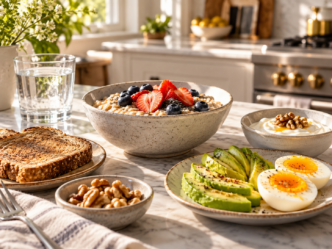

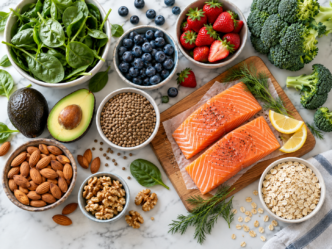
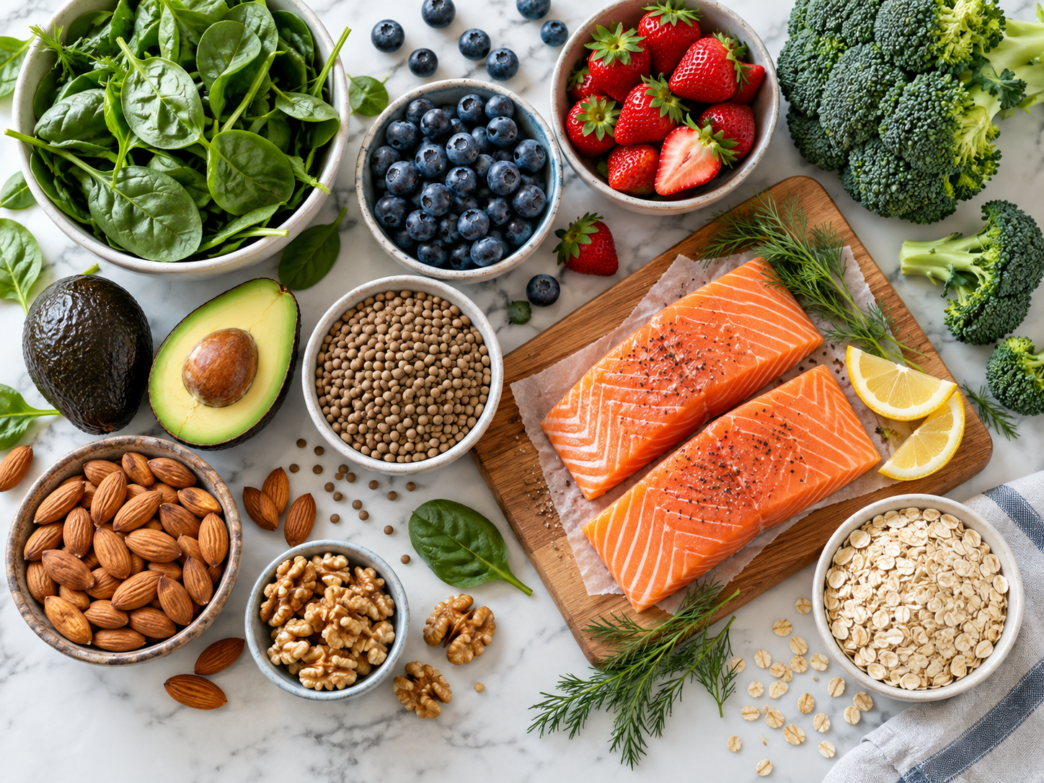
Blood sugar isn’t influenced by one food alone.
Your overall eating pattern, portion sizes, physical activity, sleep, medications, stress, and individual health all play a role.
Still, certain foods can make it easier to build balanced meals—especially foods that provide fiber, protein, healthy fats, and minimally processed carbohydrates.
Fiber is particularly useful because it slows digestion and can help moderate how quickly carbohydrates affect blood glucose. CDC nutrition guidance also recommends emphasizing nutrient-dense foods such as vegetables, fruits, whole grains, legumes, nuts, seeds, and quality protein sources.
Here are seven foods worth keeping in your kitchen.
1. Leafy Green Vegetables
Spinach, kale, collard greens, lettuce, Swiss chard, and other leafy vegetables can be an easy foundation for blood-sugar-conscious meals.
They’re generally low in carbohydrates while providing fiber, vitamins, minerals, and naturally occurring plant compounds.
You can add leafy greens to:
- Omelets
- Salads
- Soups
- Sandwiches
- Grain bowls
- Smoothies
- Stir-fries
You don’t need to eat enormous salads every day.
Even adding a handful of spinach to scrambled eggs or putting greens into a sandwich can increase your vegetable intake.
CDC’s diabetes meal-planning guidance recommends filling about half of a meal plate with nonstarchy vegetables, including foods such as spinach, salad greens, broccoli, and green beans.
Simple meal idea
Try grilled chicken or tofu with a large spinach salad, tomatoes, cucumber, avocado, and a small portion of a whole grain.
2. Beans and Lentils
Beans and lentils are remarkably versatile foods.
Examples include:
- Black beans
- Chickpeas
- Kidney beans
- Pinto beans
- Navy beans
- Lentils
- Split peas
They provide both fiber and plant-based protein, making them useful additions to balanced meals.
They do contain carbohydrates, so portion size still matters—particularly for people actively managing diabetes.
However, their fiber and protein content makes them different from many highly refined carbohydrate foods.
CDC specifically identifies beans, peas, and lentils as useful sources of protein and fiber that can fit into healthy eating patterns for people managing blood sugar.
Easy ways to use them
Add black beans to tacos.
Mix chickpeas into salads.
Use lentils in soups.
Add beans to chili.
Try hummus with raw vegetables.
A can of beans can also be one of the easiest pantry staples to keep available for a quick meal.
If you’re watching sodium intake, compare labels or rinse canned beans before eating.
3. Berries
Fruit doesn’t need to disappear from your diet simply because it contains naturally occurring sugars.
Whole fruits provide nutrients and fiber.
Berries—including blueberries, strawberries, raspberries, and blackberries—are especially easy to incorporate into meals and snacks.
Try adding them to:
- Plain Greek yogurt
- Oatmeal
- Cottage cheese
- Whole-grain cereal
- Salads
You can also eat them on their own.
Frozen berries are useful when fresh berries aren’t available or are too expensive.
One important distinction is between whole fruit and fruit juice.
CDC notes that fruit juice can raise blood sugar more quickly than whole fruit because whole fruit contains fiber that slows digestion.
Try this
Instead of a glass of fruit juice with breakfast, have water or unsweetened coffee or tea and add fresh berries to your meal.
4. Nuts and Seeds
Almonds, walnuts, pistachios, chia seeds, flaxseed, pumpkin seeds, and other nuts and seeds provide combinations of protein, fiber, and predominantly unsaturated fats.
They can make snacks and meals more satisfying.
Try adding:
- Walnuts to oatmeal
- Chia seeds to yogurt
- Pumpkin seeds to salads
- Almonds to fruit
- Ground flaxseed to oatmeal
- Natural nut butter to whole-grain toast
Portion size still matters because nuts and seeds are calorie-dense.
A small handful is often enough to add texture and nutrition to a meal or snack.
When buying flavored nuts or nut butter, check the label.
CDC notes that some nut butters contain added sugars that may not be obvious at first glance.
Choosing versions without added sugar can make the ingredient list simpler.
5. Oats and Other Whole Grains
Carbohydrates aren’t automatically “bad” for blood sugar.
The type and amount of carbohydrate—and what you eat with it—matter.
Whole grains such as:
- Oats
- Barley
- Brown rice
- Quinoa
- Whole-grain bread
contain more fiber and nutrients than many refined grain products.
CDC explains that complex carbohydrate foods containing fiber generally raise blood glucose more gradually than refined carbohydrates because they take longer to digest.
That doesn’t mean you can eat unlimited portions of whole grains.
They still contain carbohydrates.
Instead, think about pairing them with vegetables, protein, and healthy fat.
Better oatmeal bowl
Instead of sweetened instant oatmeal topped with sugar, try:
Plain oats
- berries
- walnuts
- cinnamon
- plain Greek yogurt
That creates a more balanced meal containing carbohydrates, fiber, protein, and fat.
6. Fish Rich in Omega-3 Fats
Fish can provide high-quality protein without adding significant carbohydrates to a meal.
Fatty fish options include:
- Salmon
- Sardines
- Trout
- Mackerel
Fish isn’t a “blood sugar cure,” and eating salmon won’t directly fix elevated glucose.
Its benefit is more practical: it can serve as a nutritious protein source within a balanced meal.
For example, instead of building dinner primarily around refined carbohydrates, you might have:
Salmon + roasted broccoli + a moderate portion of brown rice.
Protein can also change the way a carbohydrate-containing meal is digested.
CDC notes that eating carbohydrates alongside protein, fat, or fiber can slow how quickly blood sugar rises compared with consuming certain carbohydrates by themselves.
If you don’t eat fish, other protein options such as eggs, poultry, tofu, beans, lentils, or unsweetened dairy foods can also fit into balanced meals.
7. Avocado
Avocado contains fiber and predominantly unsaturated fat, making it a useful addition to many meals.
It also contains relatively little carbohydrate compared with foods such as bread, rice, or potatoes.
Try adding avocado to:
- Whole-grain toast
- Eggs
- Salads
- Grain bowls
- Tacos
- Bean dishes
You don’t need an entire avocado with every meal.
Even a smaller portion can add flavor and texture.
Simple lunch idea
Try a whole-grain wrap containing grilled chicken or beans, lettuce, tomatoes, peppers, and avocado.
Pair it with water and a piece of whole fruit.
That’s much more balanced than focusing on any one supposed “blood sugar superfood.”
What Matters More Than Any Individual Food?
The foods above can be useful, but the bigger picture matters more.
A person’s blood sugar response can vary considerably based on portion size, total carbohydrate intake, medication, activity, sleep, and individual physiology.
Instead of searching for one food that supposedly “lowers blood sugar,” focus on building balanced meals.
Try the Plate Method
One of the simplest approaches comes from CDC diabetes meal-planning guidance.
Using a roughly 9-inch dinner plate:
½ of the plate: nonstarchy vegetables
Think broccoli, leafy greens, peppers, green beans, cauliflower, zucchini, or salad.
¼ of the plate: protein
Examples include chicken, fish, eggs, tofu, beans, or another appropriate protein.
¼ of the plate: carbohydrate-containing food
Examples include brown rice, whole grains, potatoes, beans, fruit, or another carbohydrate source.
Then choose water or another low-calorie beverage.
This isn’t the only way to eat, but it can make meal planning easier without requiring complicated calculations.
Pay Attention to Added Sugars
One of the easiest places to accidentally consume large amounts of sugar is beverages and packaged foods.
Added sugar can appear in:
- Soda
- Sweetened iced tea
- Energy drinks
- Flavored coffee drinks
- Some flavored yogurts
- Breakfast cereals
- Sauces
- Granola
- Nut butters
CDC specifically points out that added sugars can appear in unexpected foods, including sauces, nut butters, and bottled beverages.
You don’t necessarily have to eliminate every food containing added sugar.
Instead, read the Nutrition Facts label and compare similar products.
A small change—such as replacing a sugary drink with water or unsweetened tea—can meaningfully reduce added sugar intake.
Don’t Fear All Carbohydrates
Another common misconception is that healthy blood sugar requires eliminating carbohydrates completely.
Carbohydrates are an important nutrient and a major energy source.
The goal is generally to pay attention to:
- Type of carbohydrate
- Portion size
- Fiber content
- What you eat alongside it
- Your individual health needs
Whole fruit is different from soda.
Beans are different from candy.
Oatmeal is different from a sugary pastry.
CDC recommends emphasizing fiber-rich carbohydrate sources such as whole grains, legumes, fruits, and vegetables rather than relying heavily on refined carbohydrates.
A Simple Example Day
Here’s one example of how these foods could fit into a normal day.
Breakfast
Plain oatmeal with blueberries, walnuts, cinnamon, and Greek yogurt.
Lunch
Spinach salad with grilled chicken or chickpeas, avocado, tomatoes, cucumber, and olive-oil-based dressing.
Snack
Apple with a small handful of almonds.
Dinner
Baked salmon with roasted broccoli and a moderate portion of quinoa.
Drinks
Water, sparkling water, unsweetened coffee, or unsweetened tea.
This isn’t a prescription or a required meal plan.
It simply demonstrates how protein, fiber-rich carbohydrates, vegetables, fruit, and healthy fats can work together.
Food Isn’t the Only Factor
Nutrition is important, but blood sugar is influenced by more than your diet.
Other lifestyle factors include:
- Physical activity
- Sleep
- Stress
- Body weight
- Medications
- Illness
- Hormonal changes
- Individual health conditions
If you have diabetes, taking prescribed medications and monitoring blood glucose as instructed remain important parts of care. CDC recommends combining healthy eating with activity, appropriate blood sugar monitoring, medications as prescribed, and regular healthcare follow-up.
Don’t discontinue or modify diabetes medication based on something you read online.
The Bottom Line
There isn’t one magical food that keeps blood sugar perfect.
Instead, focus on foods that make balanced meals easier to build.
Leafy greens, beans and lentils, berries, nuts and seeds, whole grains, fish, and avocado can all fit into a nutrient-dense eating pattern.
Pair carbohydrate foods with protein, fiber, or healthy fats.
Pay attention to portions.
Limit excessive added sugars and highly refined foods.
And remember that healthy eating should be practical enough to fit your everyday life.
Frequently Asked Questions
What foods are good for maintaining healthy blood sugar?
Foods rich in fiber, protein, and nutrients—including nonstarchy vegetables, beans, lentils, whole grains, fruit, nuts, seeds, and quality protein sources—can be part of a blood-sugar-conscious eating pattern.
Can people with diabetes eat fruit?
Yes. Whole fruit can fit into diabetes meal planning. Portion size and total carbohydrate intake still matter, and individual needs vary. Whole fruit generally provides fiber that fruit juice lacks.
Are carbohydrates bad for blood sugar?
No. Carbohydrates aren’t inherently unhealthy. Fiber-rich carbohydrates such as whole grains, beans, fruits, and vegetables provide valuable nutrients. Portion size and the overall meal are important.
Are eggs good for a blood-sugar-conscious diet?
Eggs provide protein and contain very little carbohydrate, so they can fit into many balanced eating patterns. Consider the overall diet rather than focusing on a single food.
Can eating nuts lower blood sugar?
Nuts can be part of a nutritious eating pattern because they provide protein, fiber, and healthy fats. They shouldn’t be viewed as a treatment for high blood sugar.
What should I drink if I’m watching my blood sugar?
Water is an excellent default choice. Unsweetened tea, coffee, or sparkling water may also be options for many people. Sweetened drinks can contain substantial amounts of added sugar.
Wellness Viora Takeaway
You don’t need exotic foods or restrictive eating rules to build more balanced meals.
Start with foods you recognize:
Vegetables.
Beans.
Whole grains.
Fruit.
Nuts and seeds.
Quality protein.
Healthy fats.
Combine them thoughtfully and focus on the eating pattern you follow most of the time—not one “perfect” meal.